
Christchurch gets good sun for a New Zealand city, but its coldest weeks are also when household power use peaks, on frosty mornings and dark evenings when panels produce little. That mismatch is the real question in any solar decision here: how much of what the panels make can you use yourself?
This guide looks at the figures published for Christchurch, how sunny the city is against other centres, what frost and the odd snowfall do to panels, how long a system lasts, and how the lines company rules change the sums.
Is solar worth it in Christchurch?
Solar is worth it for many Christchurch households, as long as the roof suits and a good share of the power can be used during the day. In June 2025 RNZ reported on an EECA study comparing rooftop solar returns in four centres. Queenstown came out ahead, followed by Auckland, then Christchurch, then Wellington, with Christchurch homes estimated to earn about 6 to 11 percent a year on the money invested.
Those figures assume a 5 kW, north-facing system on a roof with at least a 30 degree tilt and no battery. The same report found that adding a battery currently lowers the rate of return, and that power prices had more effect on returns than sunshine hours. Christchurch sat below Auckland partly because it had slightly less sunlight and lower electricity prices.
As a rough guide, a return of 10 percent a year means a system pays back its cost in about ten years, before any change in power prices. Ask any installer to show the assumptions behind their savings estimate, especially the export price and how much of the power they expect you to use yourself.
How sunny is Christchurch compared with other NZ cities?
Christchurch is one of the sunnier main centres, though not the sunniest. In its 2000 annual climate summary, NIWA recorded 2,141 sunshine hours for Christchurch, behind Wellington on 2,172 and ahead of Auckland on 1,952. Sunshine changes from year to year, so treat any single year as a guide rather than a promise.
The RNZ report on the EECA study said the differences in sunshine between the main centres were not huge. For a Christchurch home the bigger questions are the direction and pitch of the roof and shade from trees or neighbours. EECA rates north, north-east and north-west facing roofs as ideal, east or west as good and south-facing roofs as poor, with a tilt of 30 to 45 degrees producing the most power.
Suburbs differ more than a city average suggests. Cashmere rises up the north side of the Port Hills, so many sections there face the sun, though slope, trees and neighbouring homes can shade a roof in winter. For solar on the Port Hills, check winter shade on site, when the sun is at its lowest. In fast-growing towns such as Rolleston and Lincoln, newer roofs often have fewer mature trees nearby, but close neighbours and two-storey homes can still shade part of a roof.
Do solar panels work on frosty winter days?
Yes. Panels make power from daylight, not warmth, so a clear frosty day can still be productive once the sun is up and any frost on the glass has melted. The limit in a Christchurch winter is the short day and the low sun, not the cold.
Christchurch averages about 80 ground frost days a year, and frost on the panels blocks light until the sun clears it. Do not pour hot water on frosted glass or climb onto a frosty roof to clear it; the sun will do the job without the risk of a fall or cracked glass.
The bigger winter issue is timing. Orion's busiest periods are very cold winter mornings and evenings, when heaters, ovens and hot water all run at once and the panels are making little or nothing. Solar cuts your daytime use in winter, and much more in summer, but it will not carry the frosty evening peak. Shifting flexible loads into the middle of the day helps: a heat pump timer that warms the house in the afternoon, the dishwasher on a delay, and smart EV charging set to soak up surplus solar.
Find out what solar would return on your roof
Cheeky's Electrical checks your roof, winter shade, switchboard and power bills, then sizes a system to the power you will actually use.
What happens to panels in snow?
Snow on panels stops them producing until it slides off or melts, which on a tilted roof usually follows soon after the sky clears. Christchurch gets snow on average about three times a year, and in some years none, so snow is a small factor in a year's output.
EECA's approved list for solar products includes durability standards covering wind, hail and temperature, so check that the panels on any quote meet them. The mounting matters as much as the panels: roofs in Canterbury are designed for snow load as well as wind, and an array adds fixings and weight that should suit your roof. Never climb onto a snowy or icy roof to brush panels clear.
On consent, since 23 October 2025 roof-mounted arrays of up to 40 square metres in a wind zone no greater than High have been exempt from building consent nationally. Your wind zone is on your consent plans, and exposed hill and coastal sites tend to sit in higher zones, so check before assuming the simple exemption applies. Larger arrays, or arrays in a Very High or Extra High wind zone, can also be exempt when a Chartered Professional Engineer designs or reviews the fixings. Check with your council if you are unsure.
How long do solar panels last in NZ?
EECA says well-maintained panels should last 25 to 30 years, losing around 0.5 percent of their output each year. The inverter has a shorter life, about 10 to 15 years depending on quality, so plan for at least one inverter replacement over the life of the panels.
EECA also sets out minimum warranties to look for on a quote. Ask for the warranty terms in writing, and check who honours them if the installer is no longer trading.
Check your inverter's monitoring app every few months. A sudden drop in output usually points to new shading, a tripped isolator or an inverter fault rather than worn-out panels, and those are quick to put right.
| Part | Expected life (EECA) | Minimum warranty to look for (EECA) |
|---|---|---|
| Solar panels | 25 to 30 years if well maintained | 10 years product warranty |
| String inverter | About 10 to 15 years | 5 years |
| Microinverters | Not stated separately | 10 years |
| Lithium-ion battery (if fitted) | 10 years or more | 10 years |
| Installation workmanship | Not applicable | 5 years |
How do lines company export limits change the sums?
On Orion's network a single-phase home can export up to 5 kW, so most of the value of solar in Christchurch comes from the power you use yourself rather than the power you sell. North of the Waimakariri River, in Rangiora, Kaiapoi and Pegasus, MainPower is the lines company and approves up to 10 kW single phase, with a default export limit of 10 kW for small customers.
EECA puts typical buy-back rates for exported power at 8 to 20 cents per kWh, which is usually less than you pay to buy power from the grid. Every kWh you use at home is therefore worth more than one you export, which is why system size should follow your daytime use, not just the size of your roof.
Solar also adds an inverter supply and isolators to your switchboard. An old board with no spare room may need a switchboard upgrade first, and it is better to find that out at the quote stage than on installation day.
When should you get a solar assessment?
Get an assessment once you know your roof is sound for the next 25 years or so and you have a year of power bills to hand. Reroofing under a working array means removing and refitting the panels, so if a reroof is due soon, do it first.
Cheeky's Electrical looks at your roof direction, winter shade, switchboard and daytime power use, then quotes a solar panel installation sized to the power you can actually use. We handle the connection application to Orion or MainPower and record the export limit on the Certificate of Compliance, as the lines company requires.
The short answer: published estimates put Christchurch solar returns at roughly 6 to 11 percent a year, frost and snow barely dent the yearly total, and the deciding factors are your roof and your daytime use. Book online for an assessment and bring your last power bill.
Frequently Asked Questions
Should I add a battery at the same time as solar?
A battery makes most sense if you use a lot of power after dark or want backup during outages. The EECA study reported by RNZ found that a battery currently lowers the rate of return on a typical system. A middle path is a battery-ready inverter, so a battery can be added later if prices fall or your use changes.
Can solar panels go on a concrete tile roof?
Yes, with mounting brackets designed for tiles, though tile roofs take more care to keep weathertight. Many older Christchurch homes have heavy concrete tile roofs, and a 2011 report from New Zealand science and engineering societies recommended replacing heavy roofs with lightweight materials. If you are considering that change, do it before the panels go on.
Do I need to tell Orion before installing solar?
Yes. Solar needs the lines company's approval before it connects, and on Orion's network an Orion pre-approved inverter speeds up the application. In Rangiora, Kaiapoi and Pegasus the lines company is MainPower instead. Your installer should make the application and send the paperwork as part of the job.
How much roof space does a home system need?
EECA says about 35 square metres of suitable roof allows a system of up to 5 kW, and less than 20 square metres is too small for a 3 kW system. Usable area is often smaller than the whole roof once you allow for edges, vents, skylights and shaded sections, so measure the north-facing planes first.
Is solar worth it if nobody is home during the day?
It can still be, but the return is lower because more of your power is exported at the buy-back rate. Delay timers on the dishwasher and washing machine, a hot water timer and a smart EV charger can move use into daylight hours. A heat pump set to warm the house in the afternoon also uses your own solar on sunny winter days.
Our Services
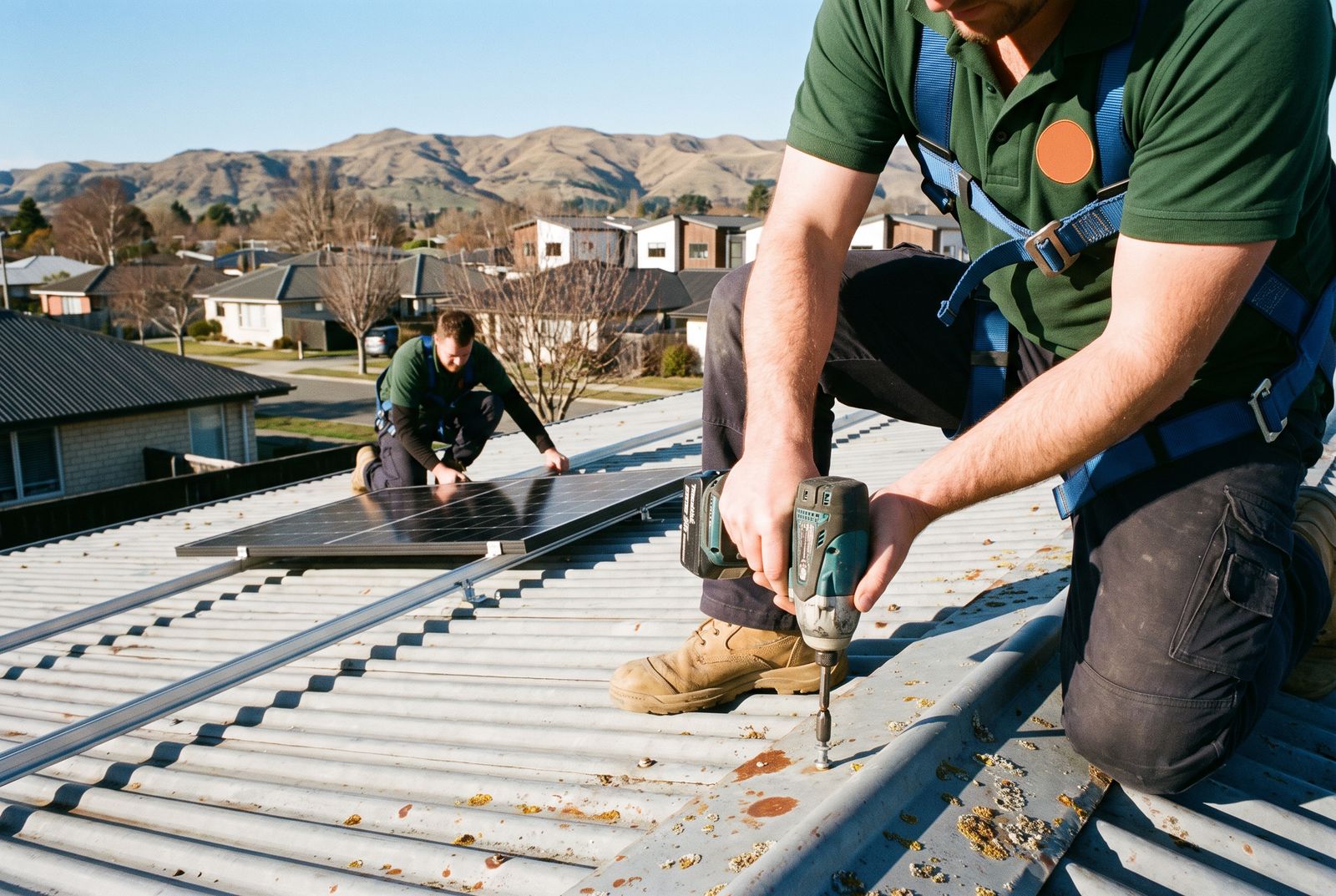 Solar InstallationSolar panel systems and home batteries sized to your power use, installed and connected by licensed electricians.
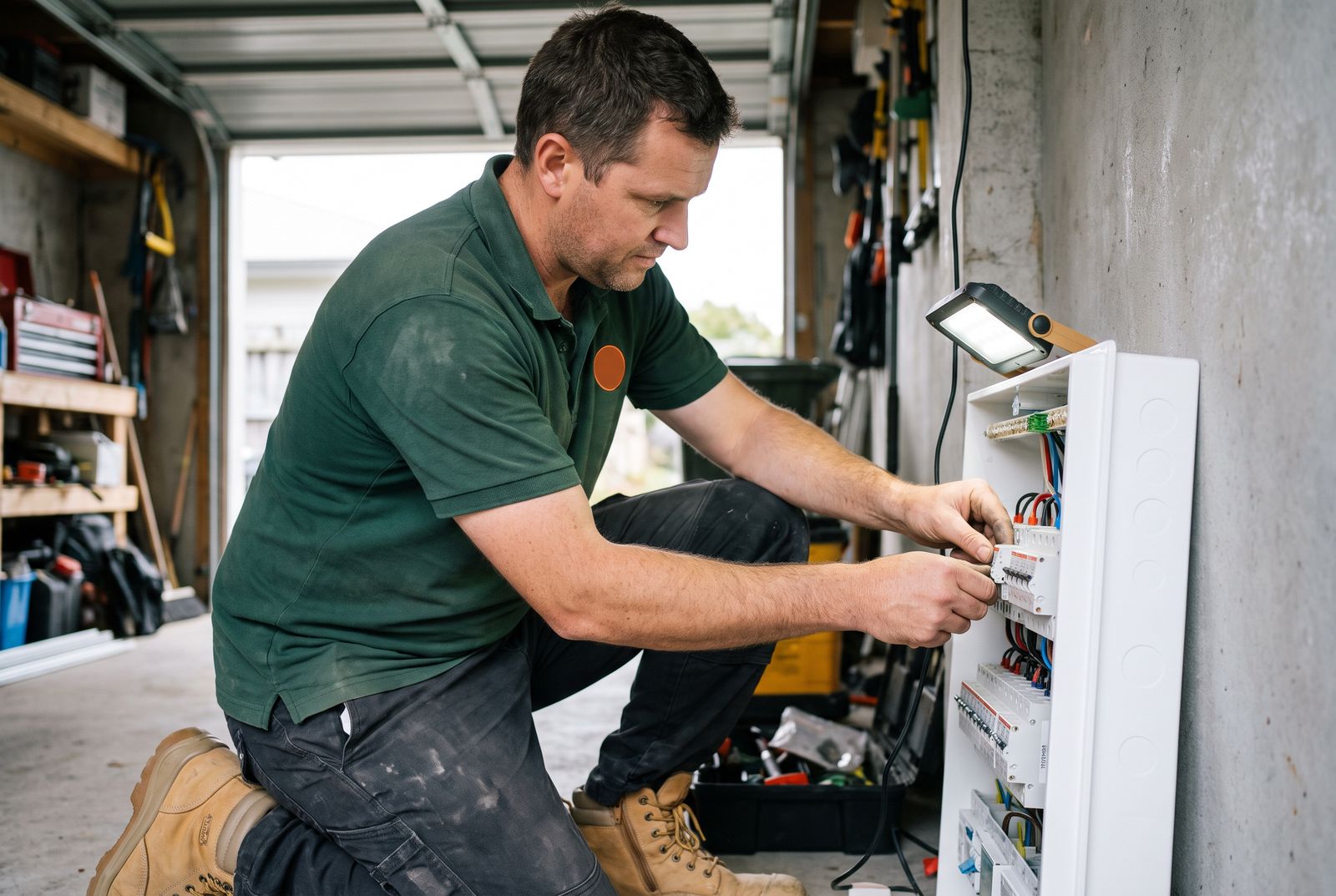 Switchboard UpgradesOld fuse boards replaced with a modern switchboard, circuit breakers and RCD protection, inspected and certified.
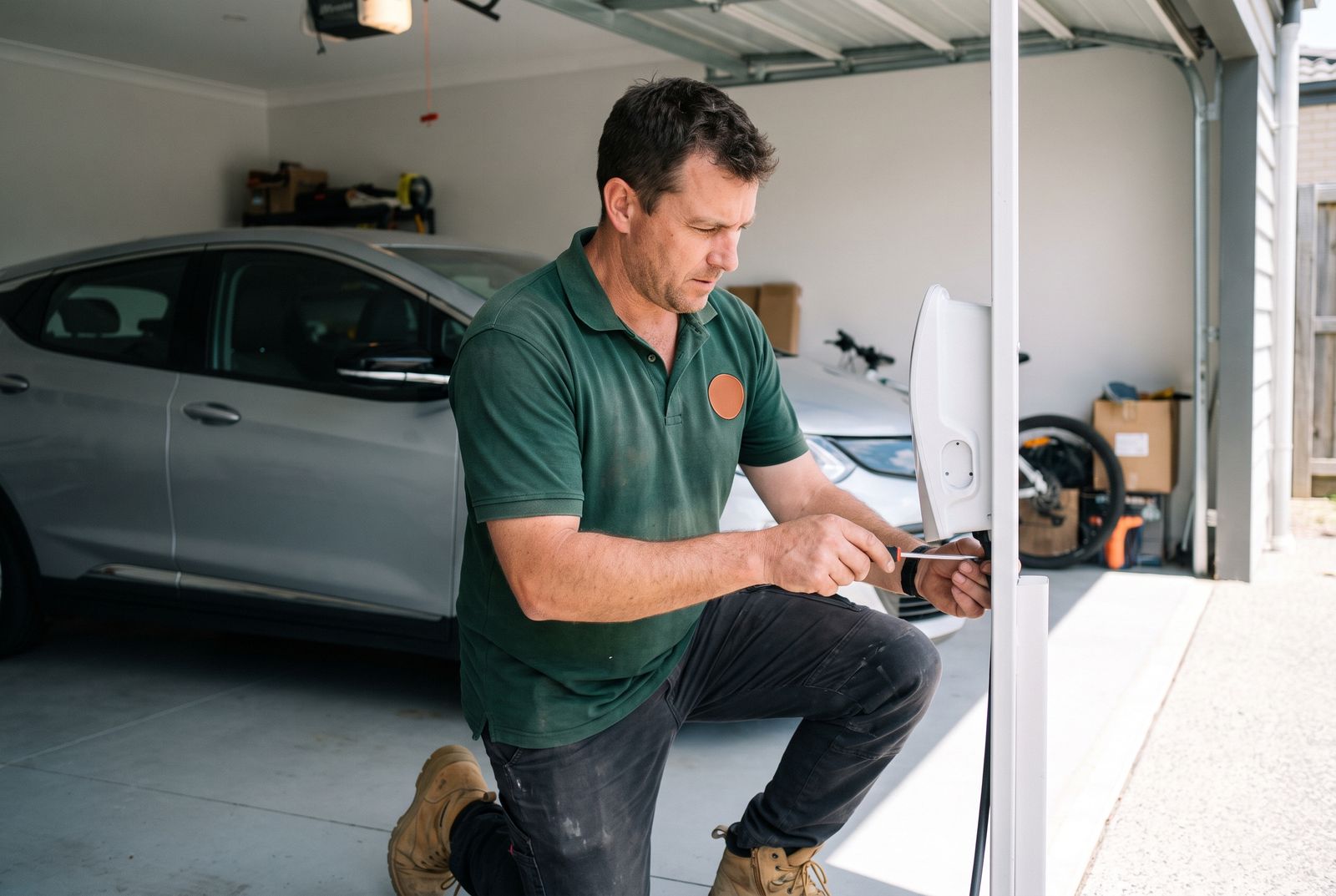 EV Charger InstallationHome EV chargers installed on a dedicated, properly protected circuit, with a switchboard check and certificate.
Read Next
Orion Solar Export Limits: The 5 kW Rule Explained
On Orion's network, a home with single phase power can export up to 5 kW of solar. Two phase supplies can export up to 1...
Read article
Solar Batteries in Christchurch: Worth It With Orion's Export Limits?
A home battery pays its way by letting you use your own daytime solar in the evening instead of selling it cheaply. Cons...
Read article
Going All-Electric in Christchurch: Can Your Switchboard Handle It?
Most modern switchboards can take a heat pump, an EV charger and an induction cooktop, but an older board or a smaller s...
Read articleSources
- RNZ via Otago Daily Times: Getting the best payoff from solar panels (EECA study, June 2025)
- NIWA: Annual climate summary 2000 (sunshine hours)
- EECA: Is solar right for your home?
- EECA: Learn about home solar technology
- EECA: Understanding home solar quotes and install (minimum warranties)
- Orion: Connecting your home or small business generation (March 2025)