Christchurch winters are long and frosty, with about 80 ground frost days a year, so a heater that runs every evening from May to September adds up on the power bill. Environment Canterbury's Clean Air rules also limit which wood burners can be installed or kept in use, which leaves electricity doing more of the work in many homes.
This guide compares the common plug-in heaters, shows how to work out what one costs to run overnight using the price on your own bill, and covers the wiring side: why heaters belong in a wall socket, why some trip the power, and when a dedicated circuit makes sense.
What is the cheapest electric heater to run?
The cheapest electric heater to run is a heat pump, and among plug-in heaters the cheapest is simply the one that uses the fewest kilowatt hours for the warmth you need. A plug-in heater turns each unit of electricity into roughly one unit of heat, whatever its shape or price tag. Consumer NZ puts it plainly: all electric heaters with the same power output cost about the same to run.
So a budget convector and an expensive designer panel with the same rating cost the same per hour at full output. The differences that matter are how quickly the heater warms the room, how evenly it spreads the heat, and whether a thermostat switches it off once the room is warm. A heater that cycles off for half the evening uses about half the power of one that runs flat out.
- Match the heater to the room: a small heater in a big, draughty lounge runs flat out and still leaves you cold.
- Choose a digital thermostat you can set to a temperature. Consumer NZ says these are generally more effective than dials.
- Use a timer to warm a bedroom before you get up or before bed, rather than leaving it on all night.
Oil column, panel or fan heater: which is cheapest?
None of them is cheaper per kilowatt hour, so the right choice depends on the room and how you use it. Because they all convert electricity to heat at about the same rate, choose on comfort, speed and safety, then keep running time down with a thermostat and timer.
The table sums up how Consumer NZ describes each type. Use it to match the heater to the job rather than to chase a lower running cost that does not exist.
Consumer NZ describes oil column heaters as safe and quiet for background warmth, which is why they so often end up in bedrooms.
| Heater type | How it heats | Suits | Watch for |
|---|---|---|---|
| Oil column | Heats oil sealed inside fins, which warms the air around it | Steady background warmth in a bedroom | Slow to heat a room, uneven warmth |
| Panel or convection | Warms air that circulates around the room; many have a fan | Background warmth in living areas and studies | Wall models still need a socket or circuit nearby |
| Fan or oscillating tower | Blows heated air, sometimes with radiant heat | Quick warmth in a small room | Can be noisy and less stable; keep clear of bedding |
| Heat pump | Moves heat from the outside air into the room | Main living areas used every evening | Needs installing on its own circuit |
Is a heat pump cheaper to run than plug-in heaters?
Yes. Consumer NZ says heat pumps are generally the cheapest to run and about three times more efficient than an electric plug-in heater, because they move heat in from outside rather than making it from scratch. For the same warmth, a heat pump uses roughly a third of the electricity.
That gap matters most in rooms you heat every day. In a lounge used every evening through a Christchurch winter, the heat pump should do the heavy lifting, while a plug-in heater stays useful for a spare room or a study you only sit in now and then. Consumer NZ also recommends using Heating mode rather than Auto, and setting about 19 to 21 degrees instead of turning the temperature right up.
If you are adding a heat pump to a room that has never had one, it usually needs its own circuit from the switchboard, which is simple on a modern board and harder on an old fuse board with no spare space.
Heater tripping or plugs running hot?
Cheeky's Electrical can check your sockets and circuits, add a dedicated heating circuit and tell you whether your switchboard can carry the winter load.
How much does it cost to run a heater overnight?
Multiply the heater's rating in kilowatts by the hours it runs, then by the price per kWh on your power bill. A 2,000 watt heater running flat out for eight hours uses 16 kWh, and 16 times your rate is the most it can cost for the night. With a thermostat cycling it on and off, the real figure is lower.
We have not put a dollar figure on it, because Christchurch power prices vary by retailer and plan, and many plans charge different rates at different times of day. Your bill shows the price per kWh and any separate night rate. Check whether the price includes GST, and remember the daily fixed charge is paid whether the heater is on or not.
Running a heater all night is rarely the cheapest way to sleep warm. A timer that warms the room before bed and again before you get up uses a fraction of the energy. Orion says its busiest times are very cold winter mornings and evenings, which is exactly when most households switch heaters on.
| Heater rating | kWh in 1 hour at full output | kWh over 8 hours at full output |
|---|---|---|
| 1,000 W (1 kW) | 1 | 8 |
| 1,500 W | 1.5 | 12 |
| 2,000 W | 2 | 16 |
| 2,400 W | 2.4 | 19.2 |
Is it safe to run a heater on a multi-board?
No. WorkSafe and Fire and Emergency New Zealand both say heaters should be plugged directly into a wall socket, not into a multi-board or extension lead. A heater draws a heavy load for hours at a time, and adding it to a multi-board that already feeds a TV, a lamp and a phone charger can push the total past what the board is rated to carry.
Warning signs that a socket or plug is struggling include a plug that feels hot, brown marks around the pins, a burning smell or a socket that crackles. Stop using it and have it checked. Fire and Emergency also advises keeping at least a metre of clear space around a heater while it is on, and never drying clothes on top of it. Never plug one multi-board into another.
Why does my heater keep tripping the power?
Usually because the circuit is overloaded or something is faulty. Socket circuits often feed several rooms, so a heater, a kettle and a dehumidifier running at once on the same circuit can trip the circuit breaker. If it is the RCD that trips instead, current is leaking to earth, which points to a faulty heater, damp, or damaged wiring.
Try the heater in a different room. If it trips everywhere, the heater is the likely culprit and should be replaced. If only one circuit trips, or the lights dim when the heater kicks in, book electrical fault finding so the cause is traced rather than the breaker simply reset. Cheeky's Electrical uses proper test gear to find which circuit, socket or appliance is at fault.
When is it worth adding a circuit or upgrading the switchboard?
If you heat the same room every night with a plug-in heater, or you are adding a heat pump, it is worth considering a dedicated circuit for a heater or heat pump. It takes the heating load off the shared socket circuit, so the heater is no longer competing with the kettle, and a new circuit comes with RCD protection.
Older homes are where this comes up most. Many original houses in Beckenham date from the 1900s to the 1950s, and older homes in Beckenham can still have rubber-insulated cable that goes brittle and should be replaced. Bishopdale's housing mostly dates from the 1960s on, so the board there may be the one the house was built with. Newer homes in Rolleston, much of which was built in the last two decades, are more likely to have a modern board with room to spare.
Cheeky's Electrical checks the switchboard, the circuit loads and the sockets you rely on for heating, then gives you a written price before any work starts. If an old fuse board cannot safely take another circuit, the switchboard upgrade is shown as its own line so you can see what it costs. You can book online at a time that suits.
The short answer: a heat pump is the cheapest way to heat a room you use every day, every plug-in heater costs the same per kWh, and the real savings come from thermostats, timers and wiring that can carry the load safely.
Frequently Asked Questions
Are infrared or radiant heaters cheaper to run?
A radiant or infrared heater uses the same electricity per hour as any other heater of the same wattage. It can feel cheaper because it warms the people and surfaces in front of it rather than all the air, so it suits a desk or workbench. For warming a whole room, it is no cheaper.
Do low-wattage or eco heaters save money?
Only by giving out less heat. A 1,000 W heater uses half the power of a 2,000 W heater each hour, but it also produces half the heat. In a small, well insulated room that may be all you need. In a large or draughty room it simply runs for longer, and the saving disappears.
Is an electric blanket cheaper than heating the bedroom?
Usually, yes. Warming the bed directly uses much less power than heating a whole room overnight. Check electric blankets each winter for worn cords, scorch marks or broken controls, and replace any that are damaged.
Can I leave a portable heater on when I go out?
It is safer not to. A portable heater left running in an empty house is a fire risk if a curtain, a toy or washing ends up against it. If you want the house warm when you get home, set a heat pump timer instead, since it is fixed in place and designed to run unattended.
Do I need an electrician to install a wall panel heater?
A plug-in panel heater can be hung on the wall and plugged into an existing socket yourself. A hard-wired panel heater, or a new socket or circuit to feed one, is fixed wiring that must be done by a licensed electrician, who then gives you a Certificate of Compliance for the work.
Our Services
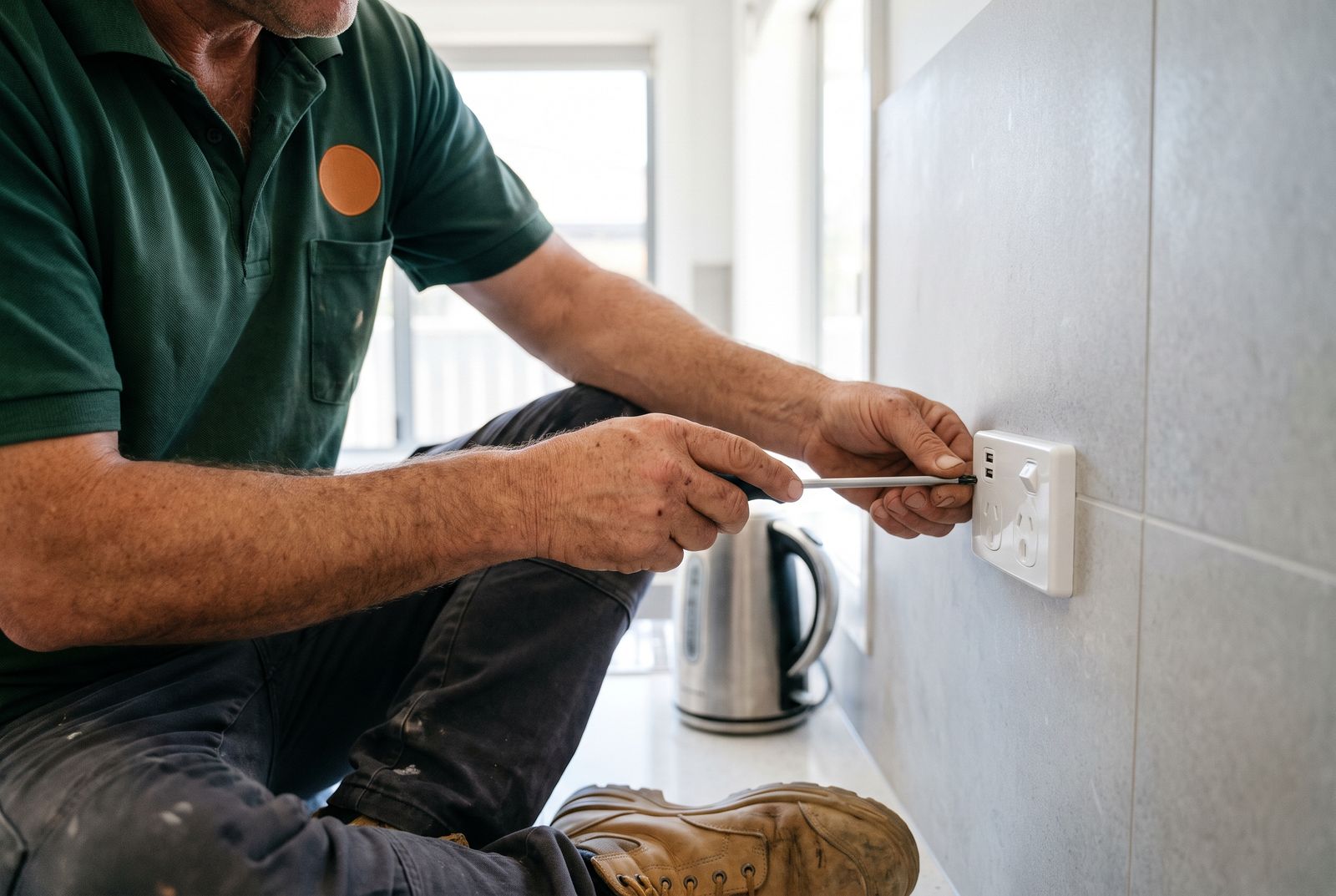 Power PointsExtra power points, USB sockets, outdoor weatherproof outlets and new circuits for heat pumps, spa pools and workshops.
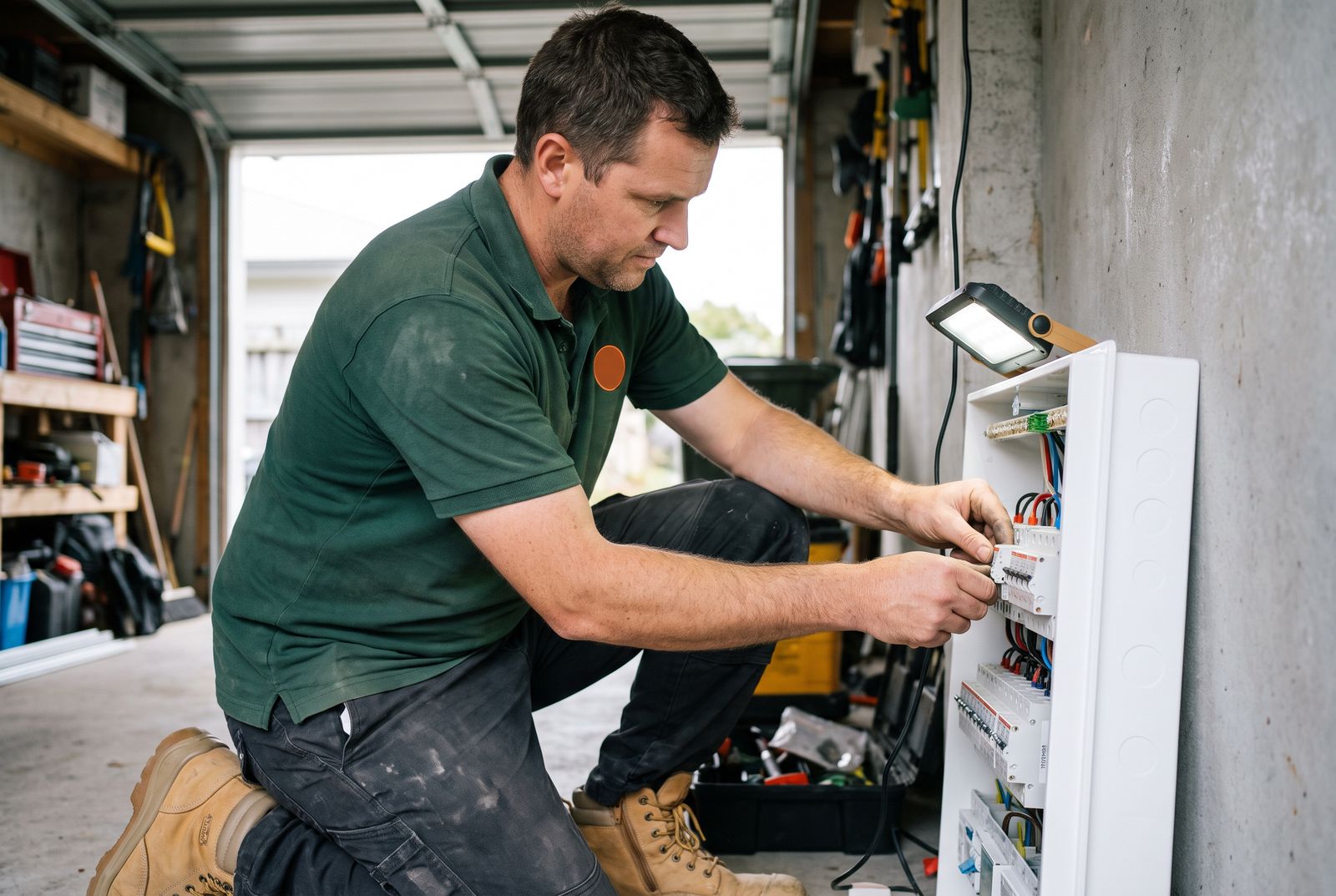 Switchboard UpgradesOld fuse boards replaced with a modern switchboard, circuit breakers and RCD protection, inspected and certified.
 Electrical RepairsTripping RCDs, dead power points, flickering lights and faulty switches traced to the cause and repaired, not just reset.
Read Next
Electric Underfloor Heating in Christchurch: Cost to Install and Run
Mitre 10 lists electric underfloor heating at about 150 to 200 watts per square metre, so a 5 square metre bathroom floo...
Read article
Going All-Electric in Christchurch: Can Your Switchboard Handle It?
Most modern switchboards can take a heat pump, an EV charger and an induction cooktop, but an older board or a smaller s...
Read article
Wood Burner Expiring? Switching to Electric Heating in Christchurch
In the Christchurch Clean Air Zone, Environment Canterbury treats a low-emission wood burner as non-compliant 20 years a...
Read articleSources
- Consumer NZ: Renter's guide to heating your rental (heater types, running costs, thermostats)
- WorkSafe: Electrical equipment and appliances (heaters and multi-boards)
- Fire and Emergency New Zealand: Indoor fires and heaters
- Orion: Our prices (network rush hours)
- Environment Canterbury: Burner types and Clean Air rules